Intelligent workflow automation combines software, artificial intelligence, and system integrations to streamline repetitive clinical and administrative processes.
Unlike traditional automation, AI-powered workflows can process unstructured information, apply context-aware rules, and route exceptions for human review. By incorporating Human-in-the-Loop controls, healthcare professionals remain responsible for decisions that require clinical judgment, authorization, or organizational oversight.
In this article, we explore common healthcare automation use cases and explain the process we follow to design, develop, validate, and deploy reliable workflows.
Common Use Cases
Intelligent automation can support a wide range of clinical and administrative processes. These are some of the most common workflow solutions we develop.

Clinical Documentation
Generate, review, route, and distribute consultation notes, discharge summaries, referral letters, patient instructions, and other clinical documents.

Billing & Invoicing
Extract billing information, validate required data, generate invoices, and route exceptions for review across clinical and accounting systems.
Lab Result Processing
Receive, classify, prioritize, and distribute laboratory results while escalating abnormal or urgent findings to qualified professionals.
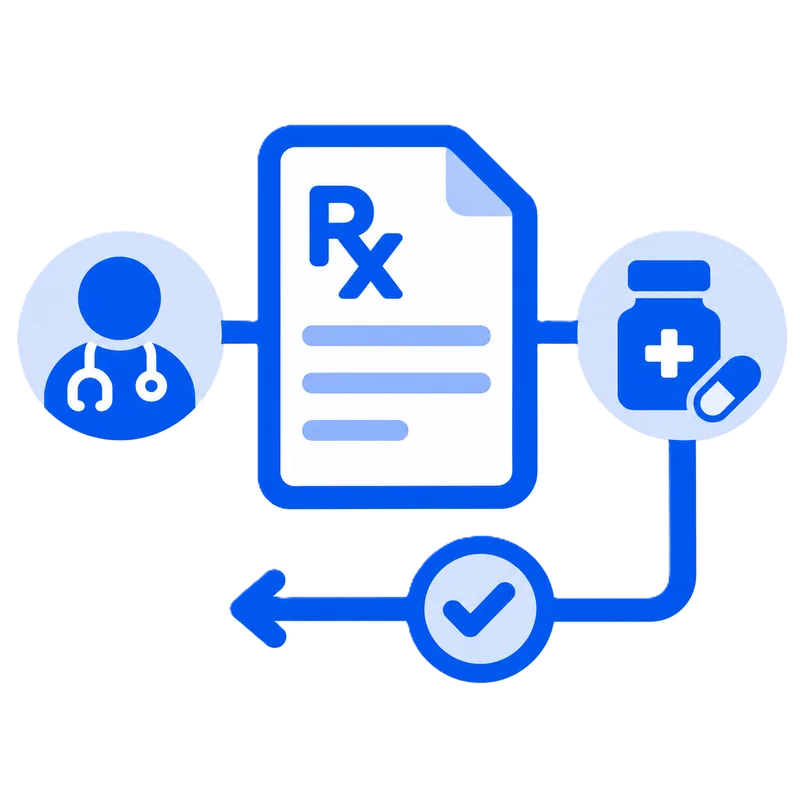
Prescription Workflows
Collect renewal requests, validate predefined requirements, route prescriptions for clinical approval, and keep patients informed.

Referral Management
Collect documentation, validate referral criteria, identify the appropriate service, and track progress throughout the patient journey.
Follow-Up Communications
Send reminders, educational materials, surveys, and questionnaires while identifying responses that require additional attention.
Our Approach to Workflow Automation
Healthcare workflow automation involves more than connecting applications or replacing isolated manual tasks. Every organization has its own processes, business rules, approval requirements, systems, and operational constraints.
Our approach focuses on creating secure, maintainable, and scalable workflows that integrate with the organization’s existing technology while keeping professionals in control whenever human review is required.
End-to-End Process
From process mapping to production deployment
Each phase builds on the previous one, helping reduce implementation risk and ensuring that the final workflow addresses real clinical and operational needs.
-
Step 1
Process Mapping
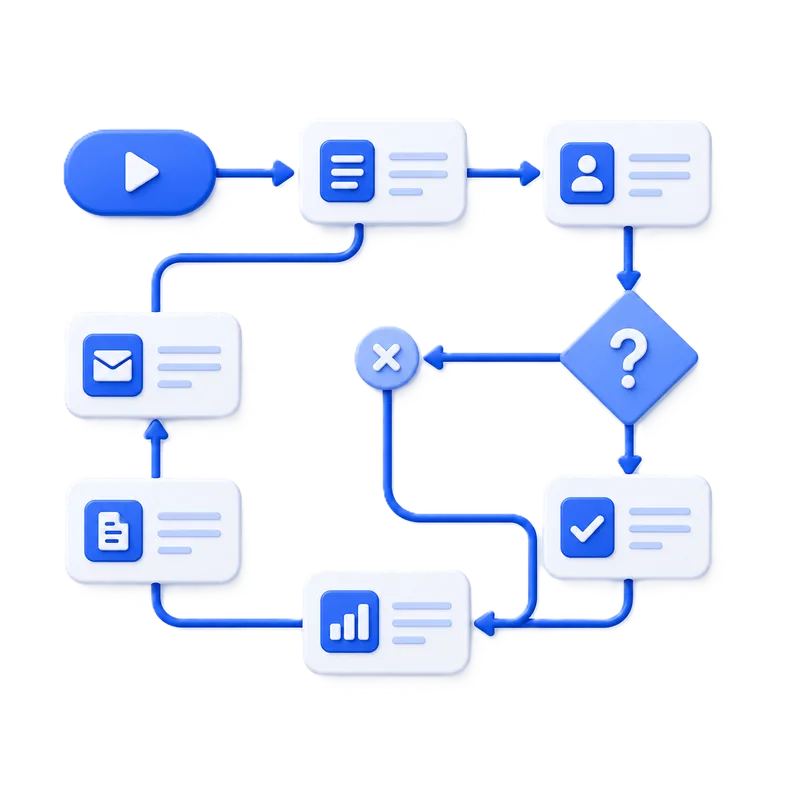
We collaborate with stakeholders to understand how work is currently performed, documenting the people involved, systems used, information exchanged, decisions made, and approvals required at each stage.
We then identify repetitive tasks, bottlenecks, dependencies, exceptions, and improvement opportunities. This assessment allows us to define priorities, success metrics, and a practical automation roadmap.
-
Step 2
Automation Design
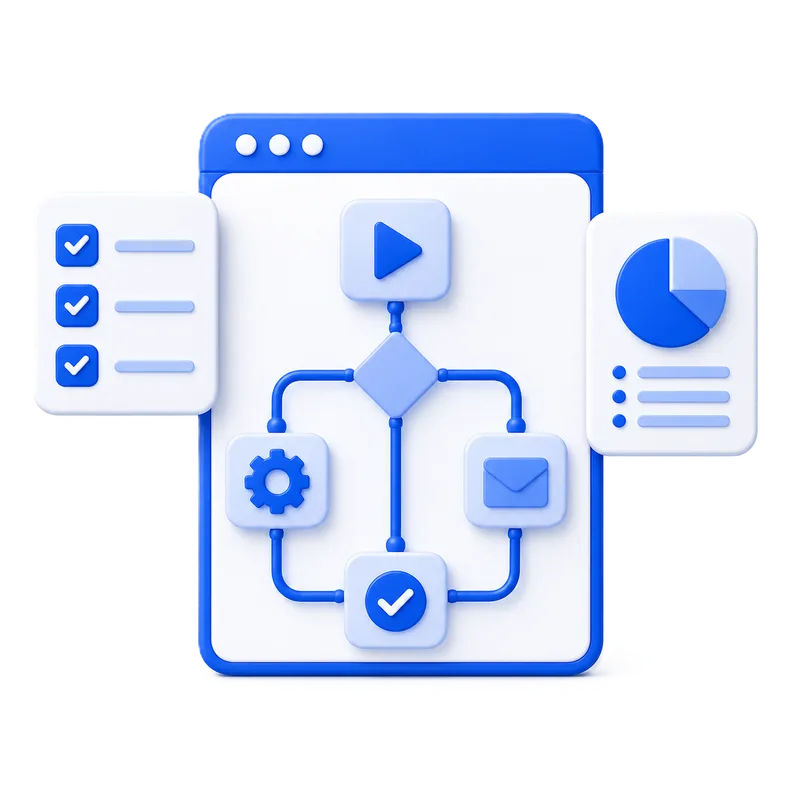
We design the future workflow by defining its business logic, automation rules, approval paths, notifications, escalation mechanisms, exception handling, and required system integrations.
Human-in-the-Loop checkpoints are incorporated wherever clinical judgment, organizational policy, or regulatory requirements make professional review necessary.
-
Step 3
Development & System Integration
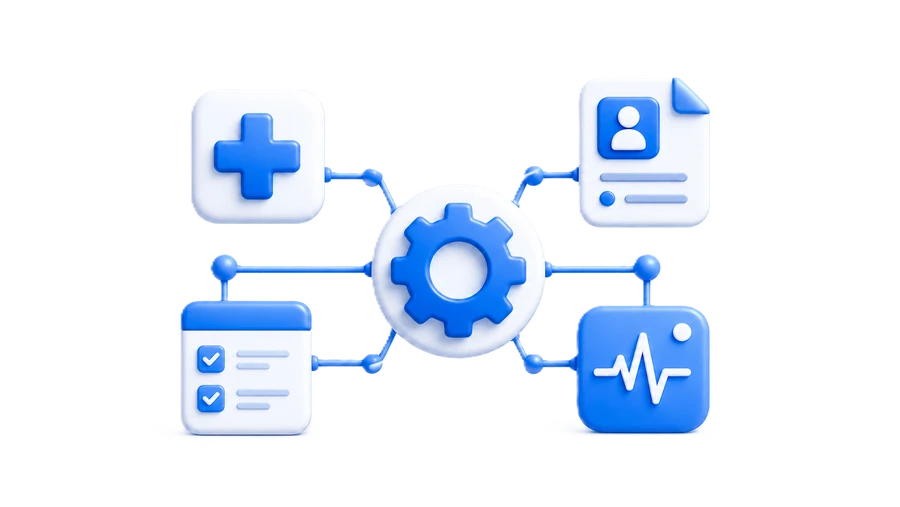
We develop the automation and connect it with the systems required to execute the workflow. This may include EHRs, laboratory platforms, scheduling applications, databases, APIs, messaging services, cloud tools, and AI models.
Business logic, security controls, Human-in-the-Loop interactions, and system integrations are implemented with scalability, reliability, and maintainability in mind.

-
Step 4
Testing & Validation
Before deployment, we test business rules, system integrations, approval paths, permissions, exception handling, data transfer, notifications, and end-to-end workflow execution.
The solution is refined through iterative testing and stakeholder feedback until it performs consistently across realistic scenarios and defined edge cases.

-
Step 5
Deployment & Support
Once validated, the workflow is deployed into the production environment and configured to operate alongside existing systems and day-to-day processes.
We provide documentation, user training when appropriate, and post-delivery support. Workflows can later be refined, expanded, and adapted as organizational needs evolve.

Plans & Pricing
Choose a starting plan based on the number of workflows, integrations, and level of customization required. Final scope and pricing are confirmed after an initial discovery call.
Medical Workflow Automation
A starting point for different project scopes
Plans can be adapted according to workflow complexity, system integrations, AI requirements, and organizational needs.
Basic
One clearly defined workflow with one system integration.
From USD 2,000
Standard
Up to three workflows and integrations, with Generative AI when required.
From USD 4,500
Advanced
Complex workflows with custom integrations, APIs, access controls, monitoring, and analytics.
Custom quote
Building Workflows That Fit Your Organization
Successful automation is not defined only by the technology behind it. Its value depends on how well it reflects the real workflow, integrates with existing systems, handles exceptions, and supports the professionals responsible for delivering care.
At Argenticare, we combine healthcare-domain expertise with end-to-end technical development to transform repetitive, time-consuming processes into practical and reliable automation solutions. Every workflow is designed around the organization’s goals, users, operational requirements, and technology environment.
Ready to Explore AI for Your Organization?
Explore how Argenticare can support your goals with AI, data, and automation.